
PREMIERES

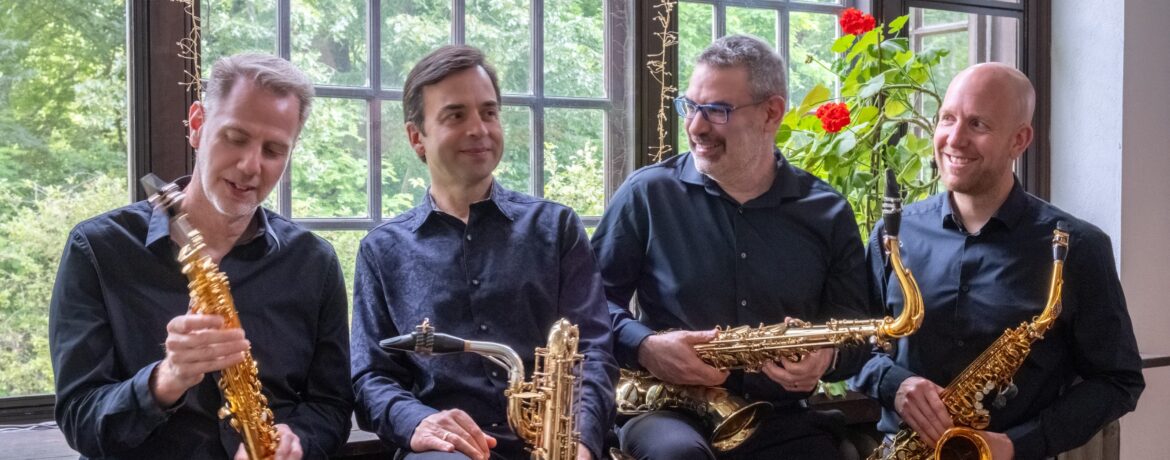
Hailed by The New Yorker as “ever-adventurous,” PRISM Quartet presents PREMIERES, a pay-what-you-wish program of brand new works composed for the ensemble. The concert features the world premiere of Quartet for Saxophones by clarinetist/saxophonist, composer, conceptualist, and Blue Note recording artist Don Byron, winner of the Rome Prize and a Pulitzer Prize finalist; Kind Mothers by DownBeat Critics Poll winner (rising star on the tenor) Grant Stewart, a saxophonist/composer and founder and artistic director of the Tribeca Jazz Institute who has performed with Jimmy Cobb, Clark Terry, Etta Jones, and Brad Mehldau; There/back by composer/conductor and winner of PRISM Quartet’s Robert Capanna Commissioning Award Teddy Poll, who served as resident conductor with the Houston Grand Opera and assistant conductor at the Glimmerglass Festival and San Francisco Opera; and Via Appia by 18-year-old Henry Vidaver, winner of the PRISM Quartet/Walden School Student Commissioning Award. Rounding out the program is Emily Cooley’s Dissolve from the Quartet’s new release on XAS Records. Cooley, whose music has been described as “a beautiful delicacy” by Vermont Today, was the inaugural winner of PRISM’s Robert Capanna Commissioning Award (2018).
Program
Quartet for Saxophones (2026) by Don Byron (b. 1958)
Kind Mothers (2026) by Grant Stewart (b. 1971)
There/back (2026) by Teddy Poll (b. 1988)
Via Appia (2026) by Henry Vidaver (b. 2007)
Dissolve (2018) by Emily Cooley (b. 1990)

Don Byron
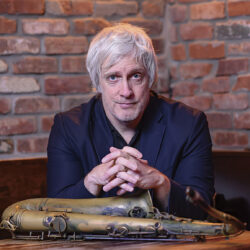
Grant Stewart

Teddy Poll

Emily Cooley
Quartet for Saxophones by Don Byron, in the composer’s words, draws “on both the cinematic quality and fearlessness” exemplified in the works of iconic 50s and 60s film composers Leonard Rosenman and Alex North, graphic designer/filmmaker Saul Bass, and “the cultural heritage of the saxophone itself, as an instrument that is at once iconic of jazz, funk, and pop music, but is rooted in classical traditions dating from its invention in the 1840s to its current prominence as a voice in new classical music.” Byron notes that “despite my long love affair with the clarinet family, I have played saxophone for many years but usually avoid writing for my own instruments in commissions. My appreciation of the saxophone comes in part from my teacher, the late Joe Allard. He was particularly keen on saxophonist Sigurd Rascher’s overtone exercises, which were the backbone of his pedagogy. My piece for PRISM Quartet utilizes these not always pretty sounds, sounds that everyone from Eddie Daniels, John Yeh, John Coltrane all shared in common. To the public ear these sounds are less polished and their tuning can vary, but the purity of timbre is at the heart of my attachment to the saxophone and its colors.”
Kind Mothers by Grant Stewart is dedicated to the memory of three mothers. Grant Stewart accepted the commission soon after losing his mother; his friend and commissioner Ken Pace had also lost his mother recently. Twenty-four years earlier, PRISM’s tenor saxophonist Matthew Levy, also a dear friend of Ken, lost his mom. Stewart writes that the phrase “kind mothers” comes from a Buddhist concept: “birth, death, and rebirth have occurred so many times since beginningless time that everyone you meet has, at some point, been your kind mother.” The seven-movement work reflects upon conception, selfhood, rebirth, and the composer’s earliest memories of childhood, using rows and rotations of multiphonic chords.
Henry Vidaver writes, “Via Appia is loosely inspired by a bike ride along the historic Appian Way during a school trip to Rome last spring. The Appian Way traverses the Roman countryside, featuring abundant ancient ruins and relics of ancient life. Our path took us from the city’s center into almost magical areas where ruins of churches, tombs, and palaces seamlessly integrate into nature and modern development. The motif of staggered entrances by each saxophone represents the pushing of bike pedals, one after the other, until we enter a “groove” when the bike gains momentum. A moment of calm on our ride came when we were stopped in a crowded public park, overlooked by a Roman aqueduct. However, as crowds were picnicking and playing soccer, celebrating the coming of Easter, news broke of the death of Pope Francis, creating a kind of strange and surreal moment as joy transformed into shock or even grief for those around us. This informed my inclusion of an excerpt of The Exsultet, a chant traditionally sung at the Easter Vigil, commemorating Christ’s death on the eve of his resurrection.”
Emily Cooley describes Dissolve as “beginning with the statement of a musical idea in its complete form: an angular, urgent melody that bounces from player to player. As the first movement progresses, this melody warps, becomes layered, and occasionally returns in its original form, but ultimately dissolves into silence. The second movement is a kind of hymn, a quiet reflection on the process that happened in movement one. There is a quality of sadness to this hymn, but it is meant to be more nostalgic than desolate. It ends with a dissolution of its own, recalling the form of the first movement.” PRISM Quartet’s founding tenor saxophonist and Executive Director Matthew Levy adds, “There is an aura of tenderness emanating from Dissolve, and particularly the second movement. The work has a mesmerizing spiritual quality that washes over the listener and is a hallmark of much of Emily’s music.” Cooley composed Dissolve in 2018 as the winner of PRISM Quartet’s inaugural Robert Capanna Commissioning Award.
In There/Back, Teddy Poll draws parallels between musical and literary forms, noting that different lengths offer different challenges and opportunities. He writes: “There/Back is an abbreviation, rather cheekily, of Tolkien’s meta-title for The Hobbit, ‘There and Back Again.’ The music itself refers in no way to Tolkien or his work; rather, this title refers to the classic classical form, ABA. Almost as old as written music, this form describes a structure featuring one section of music, followed by an often contrasting second section, followed by a return to the first section. I’ve always thought ‘There and Back Again’ refers to this experience so aptly: the listener embarks, finds new territory, and returns, forever changed. In this piece I’ve scrambled/enjoined a series of interlocking ABAs, focusing on musical ideas that both interrelate and contrast, giving brief but hopefully complete moods. I’ve settled on an approach that averages the ‘poem’ and the ‘novel’: create a series of distilled ideas that vividly contrast, and yet are so deeply interrelated that they leave a singular and complete impression, where, like The Hobbit, we depart, arrive, and return again, but with changed ears.”
ACKNOWLEDGEMENTS
This program is made possible with generous support from the Philadelphia Cultural Fund and the Alice M. Ditson Fund of Columbia University.
ACCESSIBILITY
PRISM Quartet welcomes all individuals to our concerts, and provides a variety of accommodations for those with disabilities in accordance with the Americans with Disabilities Act. For specific accommodations, please contact info@prismquartet.com or 215.438.5282.
Settlement Music School, Germantown Branch
6128 Germantown Ave, Philadelphia, PA 19144
June 06, 2026
7:00 PM
$10, $22.50, or $35 General Admission (pay-what-you-wish)